

Chelating Agent
Why choose us
One-stop Solution
With our wealth of experience and personalized service, we can help you select products and answer technical questions.
Global Shipping
We cooperate with professional sea, air and logistics companies to provide you with the best transport solution.
Quality Control
Each batch of products has a corresponding quality inspection report to solve your doubts about the quality of the products.
Our Service
Customer service will update you with product logistics information in a timely manner to ensure that the goods are delivered on time.
What is Chelating Agent
Chelating agent is a type of complex. In the structure of chelate, there must be one or more polydentate ligands that provide multiple pairs of electrons to form coordination bonds with the central body. "Chelice" Refers to the crab's large claws. The name is a metaphor for the polydentate ligand's use of two large claws to tightly clamp the centrosome like a crab. Chelates are usually more stable than general complexes, and the five- or six-membered ring structures they often have in their structures enhance stability.


![EDTA Ethylenediaminetetraacetic Acid ([2-(Bis-carboxymethyl-amino)-ethyl]-carboxymethyl-amino)-acetic Acid CAS 60-00-4](/uploads/40492/small/edta-ethylenediaminetetraacetic-acid-2-bise3dff.jpg?size=363x0)


Benefits of Chelating Agent
Selective Coordination Ability
High quality chelating agents can selectively dissociate from specific metals The formation of complexes enables selective recognition and separation of metal ions. This selectivity.Coordination ability enables high-quality chelating agents to be used in environmental monitoring, metal ion separation and purification, and drug research Hair and other fields have a wide range of applications.
Stability
The complexes formed by high-quality chelating agents and metal ions have high stability Sex can maintain stable structures and properties under different conditions. This stability makes high.Quality chelating agents can be applied for a long time in catalytic reactions, drug delivery, and environmental remediation Maintain activity and improve reaction efficiency and selectivity.
Biocompatibility
High quality chelating agents take into account the biological phase in the design and synthesis process.Compatibility can be applied within living organisms. This biocompatibility enables high-quality chelating agents.It has important application prospects in fields such as medical imaging, drug delivery, and biosensing.
Controllable Release Ability
High quality chelating agents can achieve metal adsorption by adjusting conditions Controllable release of ions. This controllable release ability enables high-quality chelating agents to be used in drug delivery There are potential applications in fields such as tumor treatment and environmental remediation.
By complexing hard water ions such as calcium and magnesium to form water-soluble products to achieve descaling or scale inhibition directly, or reduce the adverse effect of these ions on the surfactant, which is the main component of the cleaning agent.
For example, water scale remover, softener, scale inhibitor, industrial cleaning agent, daily detergent, oilfield and mineral mining chemicals, etc.
Complexing iron and copper ions to reduce the coloration of iron/copper and other chromogenic color-emitting metal ions.
For example, to improve the whiteness of textile and paper products, and to keep the liquid products clear and bright, e.g. textile chemicals, pulp and paper making chemicals, detergent additives.
Reduce the catalytic oxidative deterioration of iron and copper ions.
For example, as peroxide stabilizers such as hydrogen peroxide bleach; to prevent product deterioration due to ion-catalyzed deterioration, to extend shelf life and reduce the risk of deterioration in the process of use.
Application of Chelating Agent


Geology
In geology, chelating agents can be used in chemical weathering studies. In the book Encyclopedia of Geochemistry, authors Viers and Oliva described chemical weathering as “the spontaneous and irreversible thermodynamic process that causes degradation of the mineral phases under the prevailing environmental conditions at the surface of the Earth.” (2018).In simpler terms, the composition of mineral elements such as rocks, water and soil is constantly changing thanks to chelating reactions occurring during their interaction with the environment.For instance, principles of chemical weathering and chelating agents are used in water treatment, as metals in pipes may cause oxidation. Here chelators like citric acid or EDTA are commonly used to capture these metals and avoid rust (Al-Qahtani, 2017).
Agriculture
Chelating agents are used in soil remediation to trap heavy metals and pollutant metals which are toxic for plant nutrition and microorganisms in soil (Nurchi et al., 2020).For instance, heavy metals like lead and cadmium constitute a big concern in agriculture because they may cause negative health effects through food consumption (Clemens et al. 1990).Chelating agents such as NTA and EDTA have being used to draw out metals from soil. However, according to Nurchi et al., the selection of chelators to efficiently remove pollutant metals from soil must be planned considering their physical-chemical features (e.g. solubility) (2020).
Medicine
Metal imbalance is correlated with the appearance of neurodegenerative diseases like Parkinson's and Alzheimer's (AD). Several cancers also involve enzymes with metal motifs where chelating agents are essential (Prachayasittikul et al., 2013).Therefore, chelating agents are used in medicine to remove toxic and heavy metals from the body in what is known as chelation therapy (Flora and Pachauri, 2010).
Types of Chelating Agent
8-Hydroxyquinoline
8-Hydroxyquinoline (8HQ) is a small organic molecule with chelating properties used in molecular biology, but it is also used in other fields like medicine, agriculture, biochemistry and textile industries.This chelating agent can be derived from plants of Asteraceae and Euphorbiaceae families or produced through chemical synthesis (Prachayasittikul et al., 2013).8HQ can form complexes with divalent metal ions (metal ions with two valence electrons), like calcium, oxygen, zinc, copper, iron, manganese, nickel and magnesium. These metals play critical functions in the metabolic equilibrium of organisms, such as cofactors in many enzymes.
EDTA
EDTA (Ethylenediaminetetraacetic acid) is a chelating agent that helps modulate enzymatic activity by controlling metal concentrations.It is soluble in water and perfect in combination with buffers because it does not affect most chemicals present in these solutions (Lopata et al., 2019).EDTA is commonly used in DNA preservation to inhibit the toxicity of metals which would otherwise damage DNA molecules (Sharpe et al., 2020).Furthermore, EDTA is used in culture media to chelate calcium and reduce cell aggregation in animal cell cultures (Parzel et al., 2009).
EGTA
EGTA (ethylene glycol tetraacetic acid) is a calcium-specific chelator. As a result, EGTA is commonly used in applications that require calcium removal from solutions or buffers where calcium may be problematic.
Hexadecylpyridinium Bromide
Hexadecylpyridinium bromide, also known as cetylpyridinium bromide (CPB) has diverse applications in molecular biology studies including protein folding, DNA extraction, and in antimicrobial assays (Verma et al., 2015).For instance, in protein folding, CBP can unfold and refold bovine serum albumin (BSA) by forming complexes with it. This linkage induces conformational changes in the protein, resulting in changes of polarity and stability and allows researchers to study protein functional properties (Sun et al., 2008).
Basic characteristics of chelating agents
A chelating agent is a compound that can form a stable complex with metal ions. Due to their strong affinity to metals, they play a very important role in many applications.
Chelating agent is a compound that can control metal ions. It can control the form, spatial configuration and chemical properties of metal ions, and has strong molecular design capabilities.
Chelating agents can change the solubility and stability of metal ions, making them more stable in water.
How to Choose Chelating Agent
Identifying Your Needs
The first step in choosing the right chelating agent is understanding your application requirements. Consider what metals you need to target, the conditions of your application (such as pH and temperature), and the desired outcome. Different chelating agents are better suited for different metals and conditions. For example, EDTA is a versatile chelating agent that can bind with a wide range of metal ions, making it suitable for applications requiring broad-spectrum metal binding.
Evaluating the Properties of Chelating Agents
When selecting a chelating agent, it is essential to evaluate its chemical properties and how they align with your application. Key properties to consider include:This indicates how strongly the chelating agent binds with metals. Higher stability constants mean stronger binding, which is crucial for applications requiring the secure capture of metal ions.
Practical Considerations
In addition to chemical properties, practical considerations are crucial in choosing a chelating agent:Compare the costs of different chelating agents, considering not only the initial price but also the efficiency and the amount needed for your process.Partner with reliable chelating agent manufacturers who can consistently supply the high-quality chelating agent you need.
Working with Manufacturers
Selecting the right manufacturer is as crucial as choosing the right chelating agent. Choose a manufacturer with a strong track record and expertise in producing high-quality chelating agents.Some applications may require custom formulations. Work with manufacturers who can tailor chelating agents to meet your specific needs.
Properties of chelating agents
Stability Constant (Affinity)
This indicates how strongly the chelating agent binds with metals. Higher stability constants mean stronger binding, which is crucial for applications requiring the secure capture of metal ions.
Selectivity
Some chelating agents are selective, binding more strongly with certain metals. Selectivity is important when you need to target specific metals without affecting others.
Solubility
Ensure the chelating agent is soluble in your solvent. Solubility affects the efficiency and effectiveness of metal ion control.
Biodegradability and Environmental Impact
Consider the chelating agent's environmental impact. Biodegradable options are preferred to minimize environmental footprints.
Chemical Structure
Chelating agents have specific molecular structures that include multiple sites capable of binding with metal ions. These structures are often characterized by the presence of functional groups, such as amino acids or sulfur-containing groups.
Metal Binding
When a chelating agent is introduced into the body, it encounters metal ions, such as those of heavy metals (e.g., lead, mercury, iron). The chelating agent’s chemical structure allows it to form coordinate bonds with the metal ions.
Complex Formation
The binding of the chelating agent to the metal ion results in the formation of a complex. This complex is a stable, soluble compound that prevents the metal ion from exerting its toxic effects in the body.
Excretion
Once the chelating agent has bound to the metal ion, the complex is typically water-soluble, allowing it to be easily excreted through the kidneys. The body eliminates the chelated metal complex in the urine, effectively reducing the metal burden.
Specificity
Different chelating agents may exhibit specificity for certain metals. For example, EDTA (Ethylenediaminetetraacetic Acid) is known for its ability to chelate a variety of metals, while other agents like DMSA and DMPS may have a more specific affinity for certain metals like lead or mercury.
Administration
Chelating agents can be administered through various routes, including intravenous (IV), oral, or intramuscular (IM) routes. The choice of administration depends on factors such as the severity of metal toxicity and the specific chelating agent used.
Monitoring
During chelation therapy, healthcare professionals monitor the process closely. This includes assessing the levels of chelated metals in the urine and monitoring kidney function, as excessive removal of essential metals or impairment of kidney function can be potential risks.
Chelating agent opportunities
Rising Environmental Awareness
Growing concerns about environmental pollution and sustainability are creating opportunities for chelating agents that offer eco-friendly and biodegradable properties. Chelating agents that minimize negative environmental impacts could find increasing demand.
Water Scarcity Solutions
With increasing water scarcity in many regions, the use of chelating agents for water treatment and purification could become a significant opportunity. Chelating agents that effectively remove heavy metals and other contaminants from water sources could play a vital role in addressing this challenge.
Agricultural Productivity
As the global population continues to rise, there’s a need to enhance agricultural productivity. Chelating agents can help improve nutrient availability in soil and enhance crop yields. The development of chelating agents that are tailored for specific crops and soil types could find a strong market.
Technological Advancements
Advances in chemical engineering and formulation technologies could lead to the development of more efficient and cost-effective chelating agents. These innovations could unlock new applications and increase the overall demand for these compounds.
Chelating Agent Trends
Green Chelating Agents
The trend towards sustainability is driving the development of green or environmentally friendly chelating agents. Manufacturers are focusing on creating products that have minimal ecological impact and are safe for both human health and the environment.
Biotechnology and Nanotechnology
Advances in biotechnology and nanotechnology are enabling the creation of more precise and targeted chelating agents. These innovations can lead to improved efficiency and reduced waste in various applications.
Regulatory Compliance
Stricter regulations regarding the use of chemicals and their impact on the environment are shaping the market. Chelating agents that meet regulatory standards and have a lower environmental footprint are gaining preference.
Customized Formulations
Chelating agents are being formulated to address specific needs in various industries. Customized formulations that cater to the unique requirements of different applications are becoming more common.
Our Factory
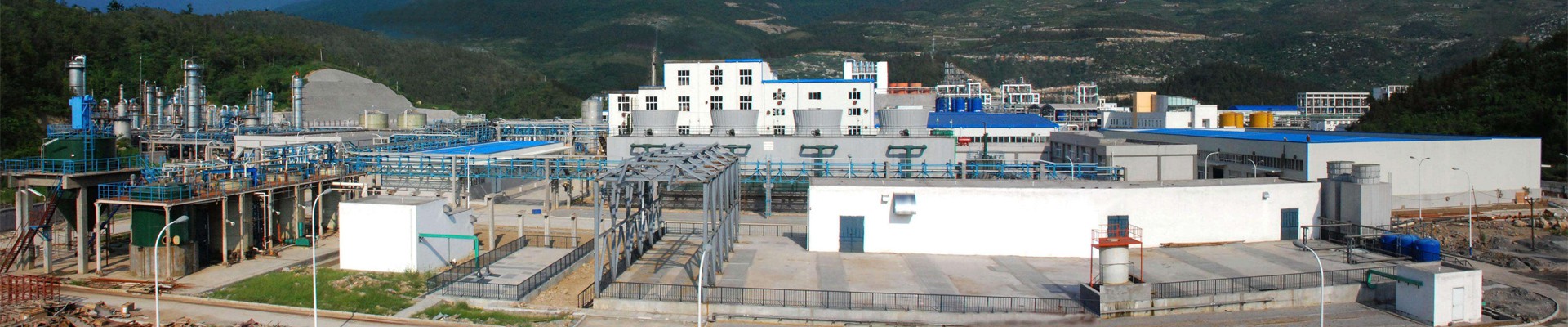
MOSINTER GROUP was founded in 2004. The head office is located in Ningbo, China. Production facilities are located in Zhejiang, Jiangsu and Shandon provinces in China. MOSINTER GROUP, specialized in the production and marketing of chemical products, has superior production equipment and a high-performance sales team, as well as advanced production technology, comprehensive quality management system and modernized testing methods.


FAQ
As one of the most professional chelating agent manufacturers and suppliers in China, we're featured by quality products and competitive price. Please rest assured to wholesale bulk chelating agent from our factory.
DTPA chelating agent, EDTA-4Na, iron chelate fertilizer EDTA Fe