

Epoxy Additive Agent
Why choose us
One-stop Solution
With our wealth of experience and personalized service, we can help you select products and answer technical questions.
Global Shipping
We cooperate with professional sea, air and logistics companies to provide you with the best transport solution.
Quality Control
Each batch of products has a corresponding quality inspection report to solve your doubts about the quality of the products.
Our Service
Customer service will update you with product logistics information in a timely manner to ensure that the goods are delivered on time.
What is Epoxy Resin Additive
Epoxy resin additive are widely used in various applications including electronic materials, automobiles, adhesives and coatings, and fiber-reinforced composites because of their unique properties. Additive manufacturing has advantages over conventional manufacturing techniques: Simplicity of printing complex structures, fast production, and freedom of design. It follows the footprint of digitalization and the 4.0 industry.


Benefits of Epoxy Resin Additive Used In Fiberglass Pultrusion
Inhibition of Oxidation
Most of the resins used in the pultrusion process — for instance, polyester, vinyl ester, and epoxy — are chemically inert.Yet that doesn't mean that they are completely free from the threat of chemical degradation as time goes on. Virtually all types of resin are subject to the process known as oxidation.The rate of oxidation varies depending on factors such as temperature and the amount of environmental oxygen present.Over time, polymer oxidation may result in a marked loss of strength, as well as discoloration and other aesthetic problems.
Improved Fires Resistance
Because the glass reinforcements in fiberglass are inorganic, they possess a natural degree of immunity to fire. Yet the same cannot be said of the polymer resin.While variations in flammability do exist between different resins, virtually all of them will combust under certain circumstances.Manufacturers almost always use additives to boost the flame resistance of fiberglass.A range of different additives may be used, including halogenated flame retardants, boric acid aluminum Trihydroxide (ATH), ammonium Polyphosphate (APP), and others.
Reduced Shrinkage
During the pultrusion process, fibers coated in wet resin pass into a heated die, which both presses them into the appropriate shape and causes the resin to rapidly cure.Unfortunately, the die's extreme temperature often leads to an unwanted side-effect: resin shrinkage. In fact, resin may shrink by as much as 8 percent while it cures.Shrinkage involves dimensional loss that can cause products to fall outside of acceptable tolerances. Likewise, shrinkage can negatively affect the appearance of fiberglass components.
Better Antistatic Resistance
Although fiberglass is naturally nonconductive, it may still accumulate static electricity. If the amount of static grows large enough, it may spontaneously discharge, potentially leading to a combustion event.This kind of occurrence presents an especial problem for fiberglass containers used to hold gasoline, oil, and other highly flammable products.By incorporating antistatic additives into a resin, manufacturers can significantly reduce the tendency of fiberglass to accumulate electrostatic charges.
Affects The Rheological Properties And Viscosity Of Epoxy Resin
The viscosity and rheological properties of epoxy resin additives have different effects. Some additives can reduce viscosity and improve fluidity, making epoxy resin easier to apply.
Improve The Mechanical Properties Of Epoxy Resin
Epoxy resin additives can significantly improve the tensile strength, flexural strength, compressive strength and other mechanical properties of epoxy resin, making epoxy resin products stronger and more durable.
Improve The Chemical Properties Of Epoxy Resins
Epoxy resin additives can make epoxy resin more stable in specific environments, such as acid resistance, alkali resistance, high temperature resistance, etc.
Enhance The Bonding Properties Of Epoxy Resin
Epoxy resin additives can improve the bonding properties of epoxy resin, improve bonding strength and castability.
Improve The Weather Resistance Of Epoxy Resin
Epoxy resin additives can make epoxy resin have better UV resistance, antioxidant and other properties, thereby extending the service life of epoxy resin products.
Types of Epoxy Resin Additive
Accelerator
Used to promote the curing reaction of epoxy resin, which can shorten the curing time several times. Commonly used accelerators include a variety of amines and acid anhydrides.
Viscosity reducing agent
Used to reduce the viscosity of epoxy resin, facilitate process operations, and reduce residual stress and bubbles. Commonly used viscosity reducing agents include fatty acids, alicyclic acids, metal salts, etc.
Toughening agent
Used to improve the toughness, impact resistance and fracture toughness of epoxy resin. Commonly used toughening agents include a variety of elastomers, modified fatty acids, etc.
Hardener
It is an important component of epoxy resin curing and determines the curing speed and performance. Commonly used hardeners include amines and acid anhydrides.
Polyester resin Additive vs epoxy resin Additive
Cost
Polyester Additive tends to cost less.The most obvious difference at first glance is cost—polyester Additive is cheaper Additive than epoxy.In mass production, you'll see polyester resin Additive used more frequently than epoxy for creation of composite fabrics like fiberglass, which are used to construct and bolster watercrafts like kayaks and boats, along with accompanying equipment like paddles.For many users, cost is the number one concern. Despite it, there are many reasons to choose epoxy instead.
Durability
Epoxy Additive has greater strength and stress handling.When it comes to durability, epoxy is superior. It boasts a greater cure strength (relevant for impact resistance and general wear and tear over years of time), as well as the ability to handle stress better.This is incredibly important for watercraft, which are often put under significant pressure during use. Saving money by using polyester Additive may seem good up front, but if your vehicle buckles later on—imposing costly repairs—you'll end up spending more than you would have otherwise.In fact, you'll even find epoxy used to fortify and support aircraft such as planes, due to its excellent ability to withstand strain and resist fracturing.
Heat Resistance
Polyester Additive can withstand higher heat a little better.When it comes to heat resistance, both resins perform well once cured, though Polyester Additive notably takes the edge here.Epoxy has a safe heat limit of 135°F. This means going above this temperature can cause heat damage, deformation, and softening.Polyester Additive has a heat limit of about 176°F. It's not often that you'd encounter this temperature limit naturally, but it's worth noting.
Versatility
Epoxy Additive can be used to repair both types of resin.When making resin repairs, it's important that you use a resin which is compatible with the surface you're repairing. Polyester Additive is only good at repairing other polyester resin Additive damage.Epoxy, interestingly, can be used to repair not only other epoxy, but also polyester Additive surfaces. Its superior adhesion and bonding allows it to connect even with polyester resin.
Health And Safety
Epoxy Additive is safer to work with.Both epoxy Additive and polyester resin Additive can be a mild health hazard. As such, it's important to use appropriate protective gear when working with either of them.That being said, epoxy is actually easier to work with in this regard. Polyester resin Additive tends to let off slightly dangerous fumes. The risk isn't severe, but you definitely shouldn't be breathing these in.Epoxy emits fewer, lower-risk fumes with notably less odor. It's also simple to wash away if it gets on your hands or skin.Nevertheless, we strongly recommend taking safety measures during any resin project by at least wearing nitrile gloves and an N95 respirator.
Chemical Resistance
Epoxy Additive has better chemical resistance.Epoxy resin Additive , once cured, will provide resistance to a wider range of chemicals than polyester Additive can account for. This is valuable in a variety of industries and even for regular home use with cleaning.
How to Choose Epoxy Resin Additive
Compatibility
When selecting an epoxy resin additive, the first thing to pay attention to is compatibility with the resin. Powder coating additives must remain stable in the powder coating for a long time in order to exert their expected effect. Therefore, general powder coating additives should have good compatibility with epoxy resin, polyester resin, acrylic resin, etc. Often, structural similarities between powder coating additives and resin powders are compared. For example, leveling agent is the main additive in powder coating production. It can reduce the surface tension difference of the coating film, homogenize the coating film and eliminate shrinkage, so that the cured coating film can achieve a smooth and shiny surface.
Adaptability Of Production Process
When designing the formula of epoxy resin additives, it should be considered that due to harsh production process conditions, such as high temperature, low temperature, high-speed shear, etc., the decomposition and volatilization of epoxy resin additives may cause the formula to fail. Some epoxy resin additives are not extruded through the extruder along with the base material but are added later to the finished powder so that the desired pattern appears. Because during the extrusion and melting process, the epoxy resin additive has already undergone pre-reaction, resulting in no pattern or different pattern size, touch, and three-dimensional effects during film formation.
Taking Advantage Of The Interplay Of Epoxy Resin Additives
The synergistic effect of epoxy resin additives refers to the synergistic effect produced when two or more additives are used in appropriate combination. Of course, the opposite of synergy is antagonism. For example, the combination of carbon black and thiophenol antioxidants in pure polyester outdoor powder coatings has excellent synergistic antioxidant effects. However, when used together with sterically hindered amines or phenolic antioxidants, the original stabilizing effect of the coating is weakened due to antagonism.
Epoxy Resin Additive Properties
While epoxy resin additives perform their normal functions, they can sometimes adversely affect certain properties of powder coatings. This is closely related to the amount of additives used. Currently, there is a low-temperature curing agent on the market that can cure powder coatings into a film at 120°c for 30 minutes, which is of course what we need. Because such low curing conditions can bring huge economic benefits, it also provides application possibilities for materials that cannot be baked at high temperatures, greatly expanding the application fields of epoxy resin additives.
The Main Function of Epoxy Resin Additives
Improve The Mechanical Properties Of Resin
Epoxy resin additives can improve the mechanical properties of the resin to a certain extent, such as impact resistance, heat resistance, environmental resistance, etc. For example, adding an appropriate amount of toughness enhancer to polypropylene can improve its toughness and impact resistance. For another example, adding an appropriate amount of plasticizer to polyurethane can improve its bending and bending recovery properties.
Improve Resin Stability
Epoxy resin additives can also improve the stability of the resin, making it more durable and stable. For example, adding flame retardants to polycarbonate can improve its high temperature and fire resistance; adding ultraviolet absorbers to polyimide can improve its weather resistance and inhibit aging and fading.
Improve Resin Processing Properties
In addition to improving mechanical properties and stability, epoxy resin additives can also improve the processing properties of the resin, making it easier to process into various shapes. For example, adding flow plasticizers to polystyrene can improve its rheological properties and increase the fluidity of the melt; adding glidants such as rosin acid active zinc to polypropylene can reduce bubbles and bubbles during processing. Shrinkage cavities.
Our Factory
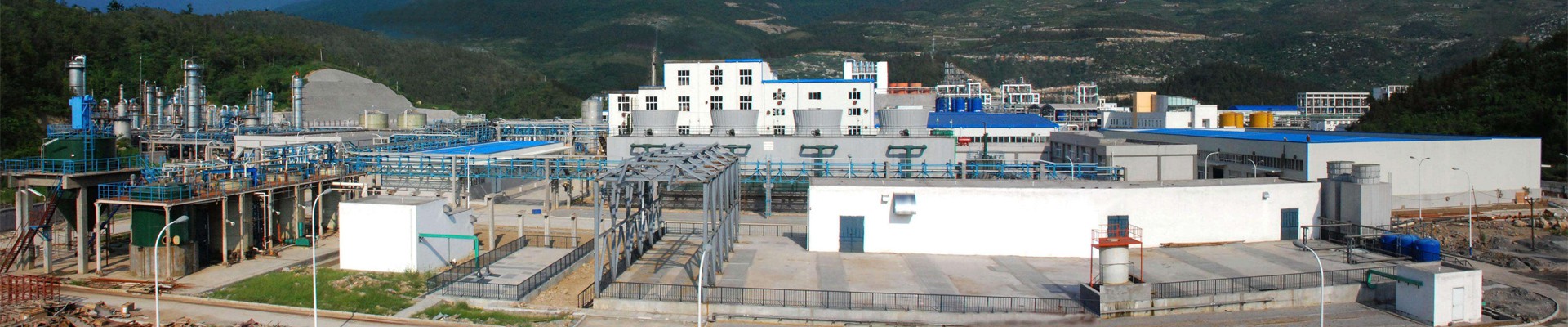
MOSINTER GROUP was founded in 2004. The head office is located in Ningbo, China. Production facilities are located in Zhejiang, Jiangsu and Shandon provinces in China. MOSINTER GROUP, specialized in the production and marketing of chemical products, has superior production equipment and a high-performance sales team, as well as advanced production technology, comprehensive quality management system and modernized testing methods.


FAQ
As one of the most professional epoxy additive agent manufacturers and suppliers in China, we're featured by quality products and competitive price. Please rest assured to wholesale bulk epoxy additive agent from our factory.