

What Is EDTA (CAS 60-00-4)? Industrial Applications Guide
Written by: ALEN, Chemical Engineer, MOSINTER | 15 years in vitamin manufacturing and pharmaceutical APIs

Two weeks ago, a formulation chemist from a European pharmaceutical company reached out with an urgent question: "We tested three EDTA samples, and the chelation efficiency varied by 23%. How do we ensure batch-to-batch consistency?" This scenario is far more common than most suppliers admit. The variance often traces back to purity levels, crystal structure, and manufacturing process controls.
EDTA (Ethylenediaminetetraacetic acid, CAS 60-00-4) is a hexadentate chelating agent with the molecular formula C₁₀H₁₆N₂O₈. This white crystalline powder binds metal ions at six coordination sites, forming remarkably stable water-soluble complexes even at neutral pH. Annual global production exceeds 80,000 metric tons, with applications spanning water treatment, pharmaceuticals, food preservation, and agricultural micronutrient delivery.
Having spent 15 years formulating with chelating agents at MOSINTER, I have observed firsthand how subtle quality differences translate into significant performance gaps downstream. This guide consolidates practical insights from our production floor and quality control laboratory.
In This Guide:
1. EDTA Chemical Properties & Technical Specifications 2. How EDTA Chelation Works: The Science Behind Metal Binding 3. Key Industrial Applications of EDTA 4. How to Select the Right EDTA Grade for Your Application 5. Quality Parameters That Matter 6. Frequently Asked Questions
1. What Are the Chemical Properties of EDTA?
Procurement teams frequently ask: "What specifications should we verify before accepting a shipment?" The answer depends on your end application, but certain parameters remain non-negotiable across industries.
EDTA exhibits a melting point of 250°C (with decomposition), density of 1.46 g/cm³ at 20°C, and limited water solubility of approximately 0.4 g/L at room temperature. The compound presents as white to almost white crystalline powder under standard conditions.
According to the NIST Chemistry WebBook, EDTA carries the IUPAC Standard InChI: 1S/C10H16N2O8. The four carboxylic acid groups have pKa values of 0, 1.5, 2, and 2.66, while the two amino groups deprotonate at pKa 6.16 and 10.24. This pH-dependent ionization behavior directly influences chelation efficiency in different application environments.
|
Property |
Value |
Testing Method |
|
CAS Number |
60-00-4 |
- |
|
Molecular Formula |
C₁₀H₁₆N₂O₈ |
- |
|
Molecular Weight |
292.24 g/mol |
- |
|
EINECS Number |
200-449-4 |
- |
|
Melting Point |
250°C (dec.) |
DSC/TGA |
|
Density |
1.46 g/cm³ |
Pycnometer |
|
Water Solubility |
0.4 g/L (20°C) |
Gravimetric |
|
Appearance |
White crystalline powder |
Visual |
|
pH (1% solution) |
2.0 - 3.0 |
pH meter |
Table 1: EDTA Technical Specifications (MOSINTER Product Data)
2. How Does EDTA Chelation Work?

What most suppliers will not tell you is why chelation efficiency varies dramatically between supposedly identical EDTA grades. The mechanism itself is elegant: EDTA functions as a hexadentate ligand, coordinating through two nitrogen atoms and four carboxylate oxygen atoms to wrap around metal ions like a molecular claw.
Research published in Mutation Research confirms that EDTA demonstrates strong chelating ability for heavy metals, particularly lead (Pb), cadmium (Cd), copper (Cu), and zinc (Zn). The stability constants (log K) for these metal-EDTA complexes typically range from 16 to 25, indicating extraordinarily stable binding.
In practical terms, when EDTA encounters metal ions in solution, it releases protons while simultaneously wrapping around the metal center. The reaction can be represented as:
[Fe(H₂O)₆]³⁺ + H₄EDTA ⇌ [Fe(EDTA)]⁻ + 6H₂O + 4H⁺ (Keq = 10²⁵·¹)
This equilibrium shows that metal ions compete with protons for EDTA binding-which explains why pH optimization is critical in industrial applications. Below pH 4, chelation efficiency drops significantly as protonation dominates.
3. What Are the Key Industrial Applications of EDTA?
During 2024, our customer service team logged over 340 technical inquiries about EDTA applications. The top three questions? How to optimize dosage for water treatment, compatibility with pharmaceutical excipients, and micronutrient delivery efficiency in fertilizers.
EDTA serves critical functions across five major sectors: water treatment (hardness reduction and heavy metal removal), pharmaceutical manufacturing (drug stabilization and chelation therapy), food preservation (metal-catalyzed oxidation prevention), agricultural applications (micronutrient carriers), and cosmetics formulation (product stability enhancement).

|
Application Sector |
Primary Function |
Typical Dosage Range |
|
Water Treatment |
Bind Ca²⁺, Mg²⁺ for softening; remove heavy metals |
10-500 ppm depending on hardness |
|
Pharmaceuticals |
Stabilize formulations; chelation therapy for heavy metal poisoning |
0.01-0.1% (formulation) |
|
Food & Beverage |
Preserve color and flavor; prevent oxidation |
25-800 ppm (per FDA 21 CFR 172) |
|
Agriculture |
Deliver Fe, Zn, Mn, Cu micronutrients to plants |
Application-specific |
|
Cosmetics |
Stabilize formulations; enhance preservative efficacy |
0.1-0.5% |
|
Pulp & Paper |
Inhibit Mn²⁺ catalyzed H₂O₂ decomposition in bleaching |
Process-dependent |
Table 2: EDTA Applications and Dosage Guidelines
According to FDA regulations (21 CFR 172.120), calcium disodium EDTA is approved for use in foods including mayonnaise, salad dressings, canned vegetables, and soft drinks at specified maximum levels. This regulatory acceptance reflects decades of safety data and widespread industrial adoption.
4. How to Select the Right EDTA Grade?
Here is something the industry rarely discusses openly: the EDTA grade you purchase for water treatment should never be used in pharmaceutical applications-even if the assay shows 99%+ purity. Why? Heavy metal contamination limits differ by orders of magnitude between technical and pharmaceutical grades.
The right EDTA grade depends on three factors: your application's regulatory requirements, the maximum acceptable metal impurity levels, and process compatibility (pH, temperature, other reactants).
|
Grade |
Purity |
Heavy Metals |
Typical Use |
|
Technical |
≥95% |
<50 ppm |
Water treatment, cleaning |
|
ACS Reagent |
99.4-100.6% |
<10 ppm |
Analytical chemistry |
|
Food Grade |
≥99% |
Meets E385 specs |
Food & beverage |
|
Pharmaceutical |
≥99.0% |
<1 ppm (Pb) |
Drug formulations |
|
Ultra Pure |
99.995% |
Trace metals basis |
Research, electronics |
Table 3: EDTA Grade Comparison
5. Which Quality Parameters Should You Verify?

In my experience reviewing supplier certificates of analysis, approximately 30% fail to include critical parameters like chloride content or NTA (nitrilotriacetic acid) impurity levels. These omissions can mask quality issues that surface during production.
Every incoming EDTA shipment should be verified for: assay content (titration), moisture/loss on drying, heavy metals (Pb, Cd, Hg), chloride and sulfate content, NTA impurity, and appearance consistency.
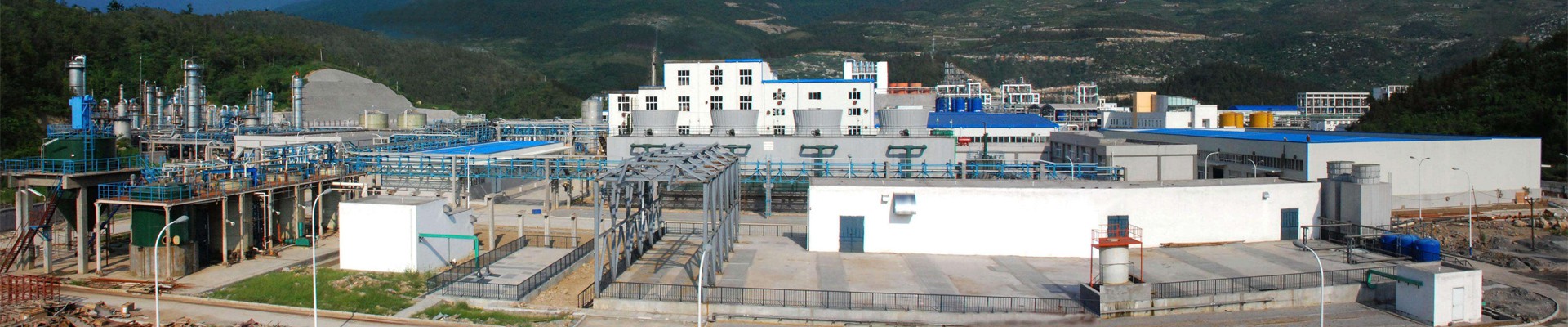
MOSINTER maintains production capacity exceeding 50,000 MT annually across our Chinese manufacturing facilities. Our internal QC protocol includes HPLC verification for every production batch, with certificates of analysis available for customer verification. For product specifications and documentation, visit our EDTA product page.
Related chelating agents from MOSINTER: DTPA (Diethylenetriaminepentaacetic acid) | NTA (Nitrilotriacetic acid) | EDTA Salts (Na₂EDTA, Na₄EDTA)
6. Frequently Asked Questions About EDTA
Is EDTA biodegradable?
EDTA demonstrates low biodegradability under standard conditions, which has raised environmental considerations. According to research reviewed by the EPA, EDTA persists in aquatic environments but shows minimal bioaccumulation. Alternatives like EDDS (ethylenediamine-N,N'-disuccinic acid) offer improved biodegradability for environmentally sensitive applications.
What is the difference between EDTA acid and EDTA salts?
EDTA acid (this article's focus) has limited water solubility. EDTA salts-disodium EDTA (Na₂EDTA), tetrasodium EDTA (Na₄EDTA), and calcium disodium EDTA-offer progressively higher water solubility. The choice depends on your application's pH requirements and dissolution needs.
Is EDTA safe for food applications?
Yes. Calcium disodium EDTA (E385) is approved by both the FDA and EFSA for food use within specified limits (25-800 ppm depending on food category). The acceptable daily intake established by JECFA is 0-2.5 mg per kilogram body weight.
Can EDTA remove lead from contaminated soil?
EDTA demonstrates strong activation ability for lead (Pb), making it effective for soil remediation applications. However, its persistence and potential to mobilize metals into groundwater require careful application protocols. Site-specific assessments are recommended before large-scale implementation.
What is the minimum order quantity from MOSINTER?
Our standard minimum order quantity is 10 metric tons, with packaging customizable to customer specifications. We accommodate flexible shipping via ocean, air, or land transport with typical delivery within 7 days from order confirmation. Payment terms include T/T and Western Union.
Conclusion
EDTA remains the industry-standard chelating agent for applications demanding reliable metal ion control. Success depends on matching the right grade to your specific requirements and verifying quality parameters that matter for your process.
Ready to discuss your EDTA requirements?
Contact MOSINTER's technical team for specifications, samples, and competitive pricing. With 21 years of industry experience and 50,000 MT/year production capacity, we deliver consistent quality with reliable global logistics.
Email: info1@mosinterchem.com
WhatsApp: +8618989305995
Website: www.moschemical.com

Last Updated: January 2026